Read continuity in two directions
A continuous hedge can link separate parts of a garden. Dry grasses below shrubs can connect surface fuels to taller vegetation. Stored timber beside a fence can extend a route toward a deck. These examples are different in form, but each asks the same question: what combustible material is close enough to support another part of the route under relevant conditions?
Horizontal continuity describes connections across the site. Vertical continuity describes arrangements that can allow fire to move upward, often discussed as ladder fuels. Both deserve attention, but neither can be reduced to a single universal spacing number. Local guidance may specify treatment distances or separation based on slope and vegetation. Confirm the rule and its scope before applying it.
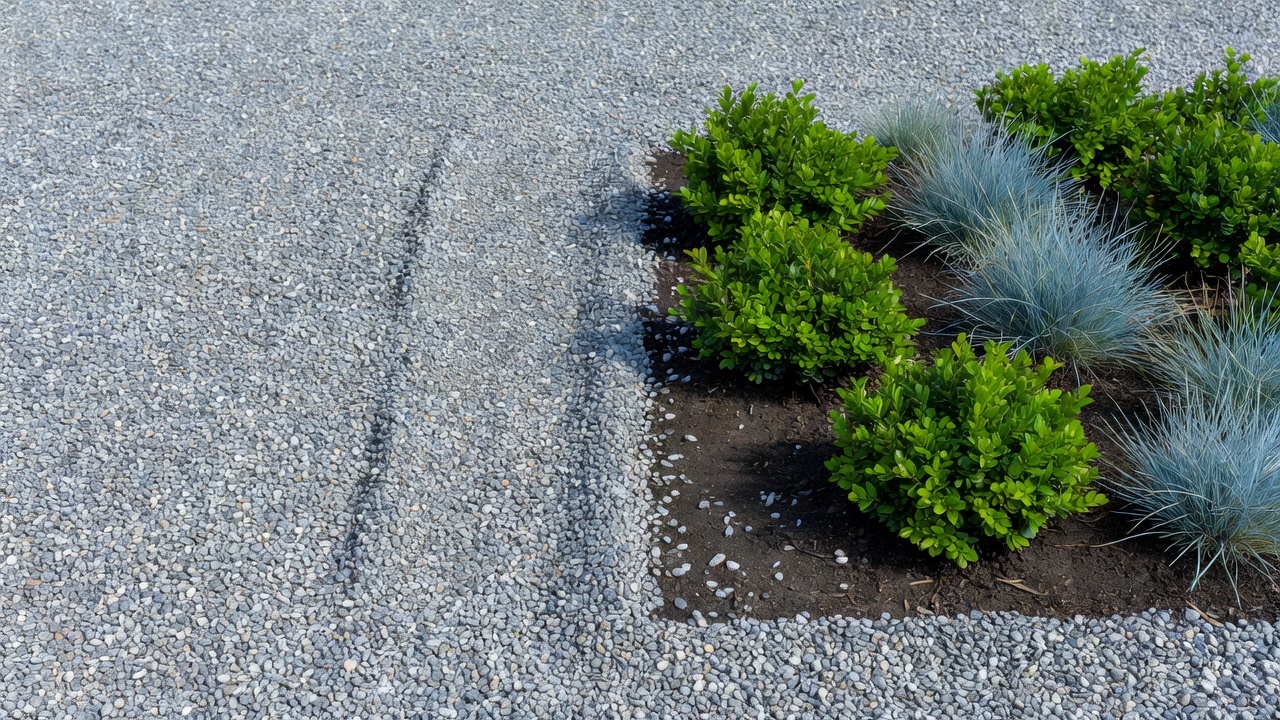
Begin closest to the structure
The immediate building surroundings deserve careful attention because ignited material there can expose walls, windows, decks and other details. Research-based guidance from IBHS emphasizes the importance of the area directly next to a home. Applicable requirements differ by location and program, so use the current local specification rather than copying an illustration without context.
Mineral groundcover, paving and other noncombustible finishes may be appropriate within that approach. Their performance depends on what is installed beneath, beside and on top of them. Leaves can settle between stones, weeds can grow through gaps, and combustible edging can reconnect a bed to a wall. Detail the maintenance access at the same time as the material choice.
A break must remain clear of accumulated combustible material. Embers can cross it; it is not a fire barrier or guarantee.
Choose plants for condition and care
No plant is fireproof. Moisture content, dead material, structure, volatile compounds, seasonal condition and surrounding fuels all influence how vegetation may behave. A species recommended in one region may be inappropriate in another climate, become invasive or require irrigation that cannot be sustained. Use locally relevant extension and fire-service advice, and check mature dimensions rather than nursery size.
Favor arrangements that remain inspectable as plants grow. Avoid relying on repeated severe pruning to hold an unsuitable species within a small space. Consider how leaves, bark, cones and flowers shed into adjacent areas. A planting that looks open at installation can become a dense fuel connection later, particularly when individual plants overlap or low growth fills planned gaps.
Separate useful ecology from unmanaged accumulation
Habitat, soil health and wildfire risk reduction are not solved by the same treatment everywhere. Organic mulch can conserve moisture and support soil, yet combustible mulch immediately against a structure can create an ignition pathway. Leaf litter may have ecological value farther from a building while being an undesirable accumulation in gutters or beside vulnerable details. Location is central to the decision.
Do not strip a whole slope simply to make it look clear. Removing protective cover can increase erosion and encourage invasive regrowth. Seek advice on staged work, suitable groundcover and disposal of cut material. Chipped vegetation is still organic fuel; moving it from standing plants into a thick layer near the house does not make the fuel disappear.
Check the non-plant fuels
Firewood, furniture, bins, doormats, shade fabrics and tools with combustible parts can undermine a carefully designed bed. Include these movable items in the landscape plan and identify a safe storage arrangement in advance. Follow local restrictions for fuel containers and hazardous materials. Do not handle or relocate dangerous materials during an active incident unless official guidance specifically directs it.
Fences deserve their own review because a continuous combustible fence may connect distant vegetation to a building. Ask whether a suitable noncombustible connection detail is feasible and permitted. Boundary ownership, privacy, pets and structural support all affect the solution. Work with the neighbor or responsible owner rather than altering shared property unilaterally.
Test the pattern against a missed maintenance visit
Imagine the site after a windy week, during water restrictions and after one planned service has been missed. Where would debris gather first? Which plants would become stressed? Which gap would close? These questions reveal designs that depend too heavily on perfect upkeep. Simplify the difficult areas before adding decorative planting elsewhere.
Record what each interruption is intended to achieve and who will maintain it. Review the result with local fire guidance and any ecological permissions. Fuel treatment is one component of preparedness alongside building measures and evacuation planning; it cannot eliminate ember exposure or make staying during a wildfire safe.
Evidence to consult
- IBHS Wildfire Prepared Home — research-informed home and near-home measures.
- NFPA Firewise USA — community-based wildfire risk reduction.
- Oregon State University Extension Fire Program — regional vegetation and land-management education.
- University of California Agriculture and Natural Resources — wildfire and landscape extension resources.